



What is UX and UI Design in Software Development?

A user interface is what someone sees on a screen. A user experience is everything they feel while using it. Simple enough to say, harder to keep straight in practice. Confusing the two shows up constantly, in software that looks polished but frustrates the people using it, or in tools that work fine but look like they were built a decade ago. Go Wombat builds both UI and UX design into every product it ships. A good login screen and a good login flow are not the same problem, and treating them as one is how teams end up shipping software nobody enjoys touching. This piece breaks down what each discipline actually does, where they overlap, and how the differences play out in real projects.
What is UI design?
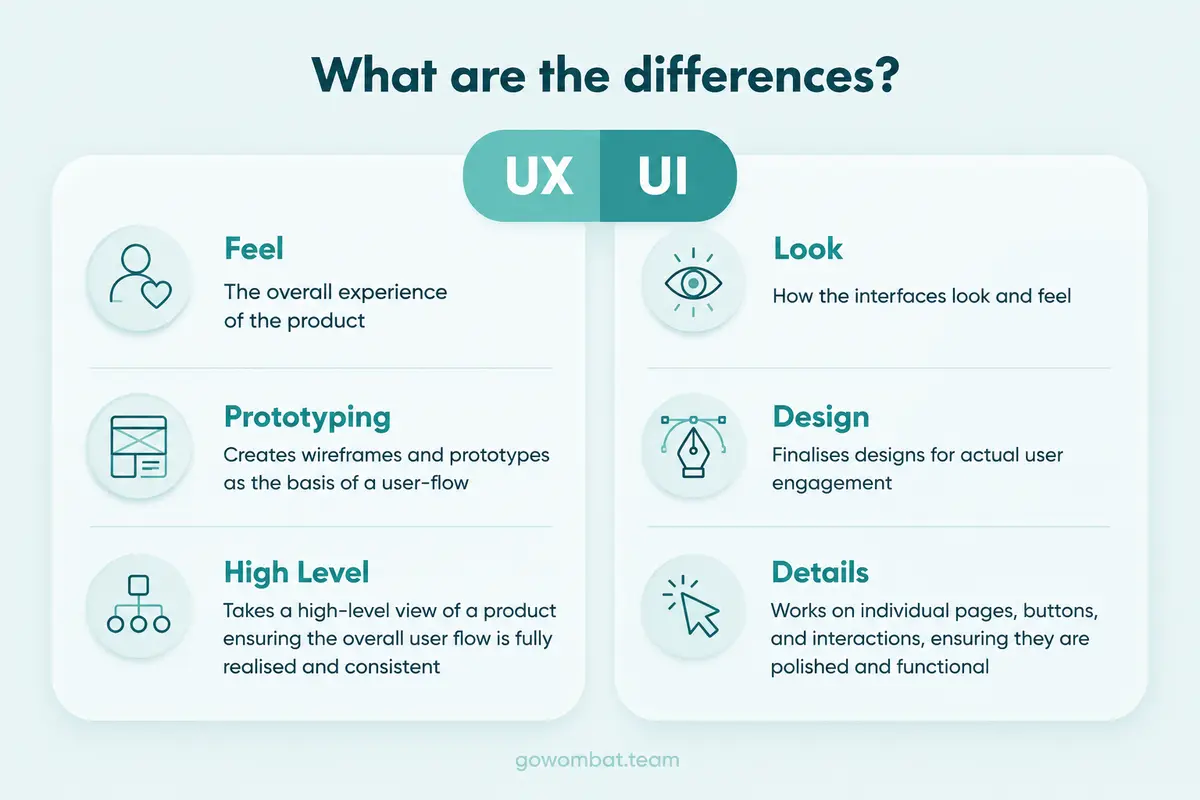
UI design is the practice of shaping the visual and interactive surface of a product: buttons, menus, colour, typography, and layout. A UI designer decides how a screen looks, and how each element responds the moment someone taps or clicks it.
There is a handful of rules that keep showing up in good UI work. The 60-30-10 colour rule is one: a dominant colour covers roughly 60% of the interface, a secondary colour covers 30%, and an accent colour, usually reserved for buttons and alerts, takes the rest. None of that matters much on its own. Spacing, contrast, and visual hierarchy do the quiet, unglamorous work of telling a user where to look first, often before they have consciously decided to look anywhere.
Figma and Framer are the default workspace now, letting designers prototype interactive screens before a single line of production code exists. UI/UX design at this level cannot really be separated from front-end engineering, not cleanly. A design that ignores how a browser or device actually renders it will fall apart the moment it reaches frontend development.
What is UX design?
Picture a screen that looks great and still fails the person using it. That gap, between something looking finished and something actually working, is what UX design exists to close.
UX design is the discipline behind how a product feels to use, from the first tap to the last, and it covers research, information architecture, usability testing, and the overall journey someone takes to get something done.
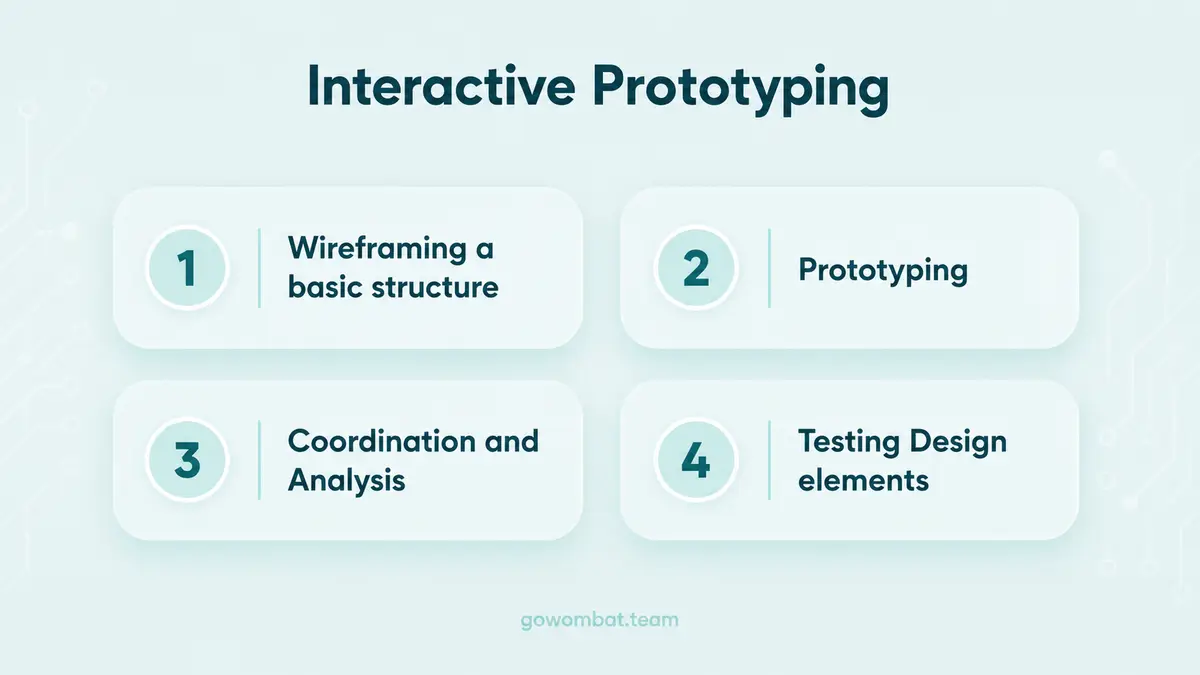
The work usually starts before any screen exists: interviews, competitor audits, journey mapping. Then wireframes. Then testable prototypes. Usability testing comes next, because a flow that looks obvious to the person who built it often ends with confused users clicking the wrong thing anyway.
ISO 9241-210, the international standard for human-centred design, describes this same loop: understand the context of use, specify requirements, produce a design, evaluate it against real users, repeat until it holds up. That loop matters more in enterprise software than in consumer apps. A confusing internal tool does not lose a sale. It loses hours of an employee's working day, every day, for as long as the software stays in use.
UX vs UI design: what's the real difference?
Is UX vs UI design really two different jobs, or two names for the same one? In practice: two disciplines, one shipped product.
Aspect | UI design | UX design |
|---|---|---|
Focus | Look and feel of individual screens | End-to-end journey and usability |
Core question | Does this look right and respond well? | Can someone reach their goal without friction? |
Typical deliverables | Style guides, component libraries, high-fidelity mockups | User journey maps, wireframes, usability test reports |
Tools | Figma, Framer, Adobe Illustrator | Miro, Maze, UserTesting |
Success metric | Visual consistency, interaction responsiveness | Task completion rate, time on task, drop-off rate |
They rarely work apart, whatever the org chart says. A UI designer needs UX research to know which screen actually matters. A UX designer needs UI craft, or the best-researched flow in the world ends up looking like it was built by an engineer in a hurry. UI vs UX design is not a competition between two roles. It is a handoff, and it happens dozens of times across a single project.
Why software teams need both, not just one
Most teams that skip UX research end up with software that technically works, but nobody enjoys using.
That is the gap between shipped and adopted.
GE Digital learned this the expensive way. After years of hardware excellence overshadowed by clunky internal software, the company built a dedicated UX Centre of Excellence and an Industrial Internet Design System to standardise how its products looked and behaved. In the first year after launch: a 100% productivity gain across development teams and an estimated $30 million in savings, according to a case study compiled by design consultancy Toptal. The story is a decade old now. The lesson still holds: UX investment pays for itself in engineering time long before it shows up in a customer satisfaction score.
This is where UX design principles stop being a nice-to-have and start being a budget line.
The UI/UX design process in 2026
What does a UI/UX design phase actually look like on a real project? Six stages, roughly in this order, though "roughly" is doing some work in that sentence.
- Discovery and research: interviews, competitor audits, and a clear list of who the software is for and what they are trying to do.
- Information architecture, or mapping out screens, flows, and the logic connecting them, before anyone touches colour.
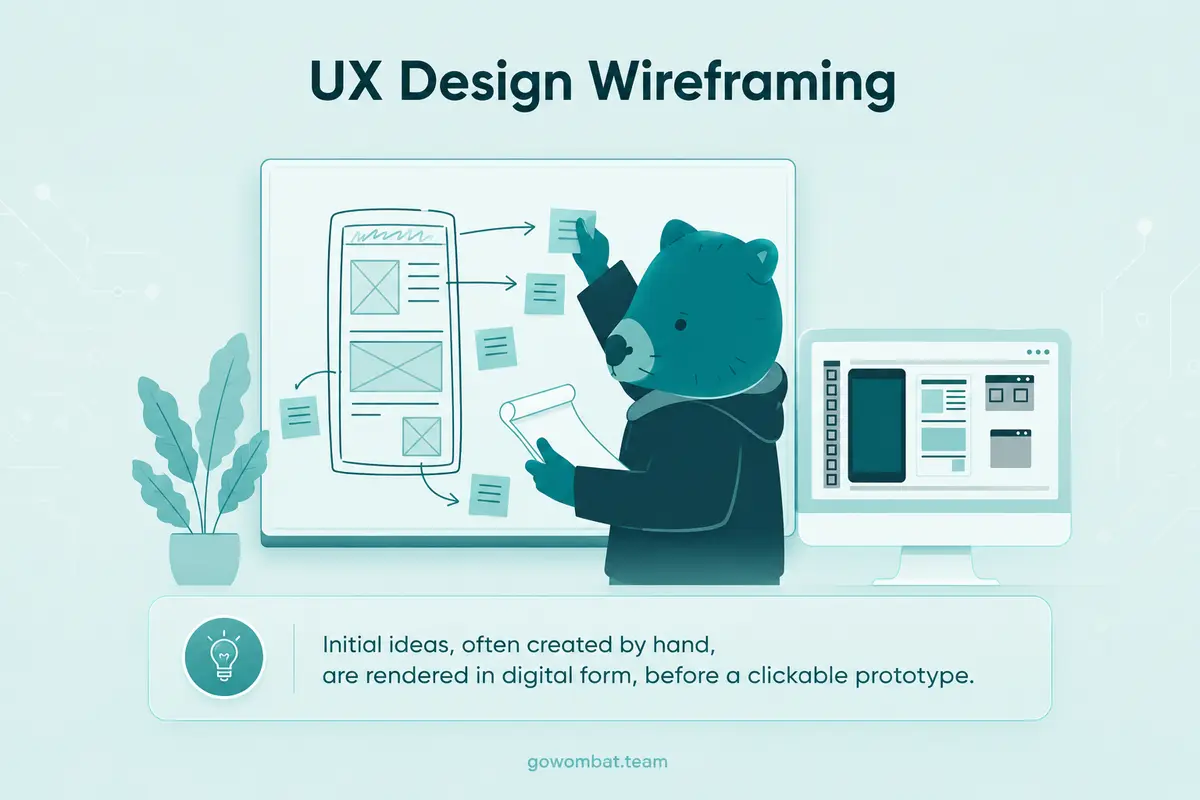
- Wireframing: low-fidelity sketches that test structure, not style, are often done on a whiteboard or in Figma's wireframe mode.
- This is where the UX design process turns into UI design: typography, colour, component states, motion.
- Prototyping and testing - clickable prototypes go in front of real users, and in 2026, this stage increasingly leans on AI-assisted usability analysis that flags friction points across recorded sessions instead of making a human review of every one.
- Handoff and QA, where specs, assets, and interaction notes move to engineering, and software testing catches the gap between what the design intended and what actually shipped.
On paper, that is six clean, sequential stages. In practice, good teams loop back constantly, especially between testing and visual design, and nobody minds, because that is how the good ones get built.
One shift worth naming for 2026: the best interfaces now treat AI as a quiet copilot, sitting in the background instead of bolted on as a chatbot, cutting the number of decisions a user has to make rather than adding one more.
Real-world examples: UI/UX design across industries
UX design examples are easier to trust when they come with names attached, so here are four, each from a different corner of software development.
Take sports and entertainment first. In January 2026, the San Francisco 49ers partnered with PwC to rebuild their digital fan experience into a single platform, rather than the scattered ticketing, streaming, and merchandise apps most clubs run. “PwC combines sports, media, and tech like no other, making them the perfect teammate to help us revolutionise the 49ers fan experience,” said Costa Kladianos, the club's Executive Vice President of Technology. The same thinking applies to any sports software built around fan or player data.
AdTech and MarTech tell a quieter version of the same story. Ad-verification platform Adloox rebuilt its reporting dashboard with development partner Avenga, migrating to Google Cloud and BigQuery to give advertisers, agencies, and publishers granular control over campaign data without waiting on support tickets. Dashboards for AdTech platforms live or die on how fast a user can find the one number that matters.
Then there is property management. TenantCloud rebuilt its dashboard and navigation in 2024, consolidating scattered settings into a single documents page and adding a lease funnel widget so property managers can see active, pending, and ended leases at a glance. The same logic drives PropTech and smart-building software: fewer clicks between a question and its answer.
Manufacturing closes the loop. The GE Digital example above applies just as directly to manufacturing dashboards, where operators reading a shop-floor screen need alarms and priorities to stand out, not compete with decorative charts for attention.
How much does UI/UX design cost, and how long does it take?
There is no single number, because UI UX design services scale with the size of the product, not the size of the invoice someone hopes to see. A single mobile app screen set might take two to three weeks. A full enterprise platform redesign, covering research, wireframes, visual design, and testing, typically runs eight to twelve weeks before development even starts.
Most of that time buys certainty, not decoration. A structured discovery phase at the start of a project catches the wrong assumptions while they still cost an afternoon of research, not a rebuilt feature six months later.
Choosing a UI/UX design partner for your software project
Look for engineering fluency first, more than a nice portfolio. A UX design agency that hands over static mockups without understanding web application or mobile app development constraints is really just handing your engineers a redesign job in disguise.
Ask how they test, too, not only how they design. Usability test recordings tell you more than a finished Figma file ever will, and a UI UX design agency worth hiring can show you both.
There is also the industry question. A UI UX design company that has never touched a regulated or data-heavy product will end up relearning your constraints on your budget, which is an expensive way for anyone to get up to speed.
Go Wombat's UI/UX design team works inside the same delivery pipeline as its engineers, from early MVP development through to production, so design decisions get tested against real technical limits before they reach a client's screen.
Final thoughts
UX vs UI design was never really a rivalry, whatever the job titles suggest. UI gets a product noticed. UX gets used, then used again. Software that only nails one of the two tends to look impressive in a pitch deck and fall apart in daily use, or the other way round: reliable, but forgettable.
The clearest sign a team is doing this right is that nobody thinks about the interface at all. They are too busy getting their work done, which is, in the end, the entire point.
Frequently asked questions
What is the difference between UI and UX design?
UI design covers the visual and interactive layer of a product: buttons, colour, and layout. UX design covers the full journey someone takes to reach a goal, including the research and usability testing behind the screens. A product needs to work well.
Is UX design harder than UI design?
Neither is harder. They demand different skills. UX leans on research and structured problem-solving, while UI leans on visual craft and interaction detail. Complex enterprise software often makes UX the bigger lift, because the underlying workflows are harder to untangle than the visuals.
Can the same person do UI and UX design?
Yes, particularly on smaller teams, where a single “product designer” role often covers both. Larger projects tend to split the work, since deep research skills and strong visual craft rarely peak in the same person.
How much does UI/UX design cost for a software project in 2026?
Costs vary widely depending on the scope. A single feature might need a few thousand pounds of design time, while a full enterprise platform redesign, including research, testing, and iteration, can run into tens of thousands.
What tools do UI/UX designers use in 2026?
Figma and Framer remain the standard for interface design and prototyping, while tools like Maze and UserTesting handle usability testing. AI-assisted analysis has become common for reviewing recorded test sessions at scale.
Why does UX design matter for enterprise software, not just consumer apps?
Enterprise tools get used for hours a day by employees who did not choose them. Poor UX there compounds daily, in lost time and workaround habits, in a way that a confusing consumer app, which a user can simply abandon, does not.
How long does a UI/UX design phase take in a software project?
Small features can move through design in two to three weeks. A full platform redesign, including discovery, testing, and iteration, more commonly takes eight to twelve weeks before development work begins in earnest.
Share and subscribe to our blog
Related articles

How To Create An Online Booking System For Your Business
Modern problems require modern solutions. For example, if people want to plan something ahead of time, they want to do everything possible to avoid wasting time. That is why people can book. Online booking helps people do many things, incl…

10 Key Software Development Trends In 2022
The evolution of software development approaches is a continuous process. Startup founders and business owners need to be well informed about new technologies and techniques to build new software or upgrade an existing one. One such develo…

Why Is the Digital Twin of an Oil Refinery the Most Complex AI System You Will Ever Build?
Building a digital twin of an oil refinery isn't a platform-selection problem — it's a physics, data, and integration problem stacked seven layers deep. From thermodynamics and sensor fusion to safety-critical control system integration, each layer depends on the one beneath it, and most failed projects trace back to programme design, not technology choice. This piece breaks down what actually makes refinery digital twins so hard to get right, with real deployment data from Cosmo Oil and Dangote showing what a well-scoped project looks like in practice.

How can we help you ?