



How Can Travel and Hospitality Software Solutions Boost Your Business

Travel and hospitality have changed more in the past five years than in the previous twenty. Guests now expect the same instant, personalised service from a hotel or a travel agency that they get from any consumer app.
Meeting that expectation without the right technology is hard. We have watched clients across hotels, travel agencies and booking platforms hit the same wall: manual processes that worked fine at a smaller scale start costing time, money and guest trust once the business grows.
So what actually separates a business that thrives online from one that gets left behind? Usually, it isn't the front-end polish. It's the software running underneath it.
This article looks at what hospitality software development actually involves, the benefits a custom solution brings, the main types of software travel and hospitality businesses build, and the technology trends worth watching in 2026.
What Is Hospitality Software Development?
Put simply, it means building the tool around your business instead of bending your business around someone else's tool. Booking engines, hotel management systems, CRM platforms, mobile guest apps: all of it can be purpose-made for a travel or hospitality company rather than pulled off the shelf.
Off-the-shelf tools solve generic problems. Custom software solves your. That's really the whole pitch, and everything below just fills in the detail.
Why Invest in Custom Software for Your Travel or Hospitality Business?
Here's the uncomfortable truth: run the same processes as every competitor, on the same generic tools, and you'll never lead the market. You'll just occupy a corner of it, quietly, forever.
Custom hospitality software development flips that. A business digitalises its own processes around its own users, partners and guests, instead of forcing guests to adapt to a system built for someone else. On paper, that sounds like a minor technical choice. In practice, it's often the difference between a digital transformation project that sticks and one that quietly gets shelved a year later.
There's a generational pressure behind this, too. Younger travellers expect to research, book and manage a stay entirely online, often through a mobile app. A business without a strong digital front door struggles to reach this audience at all, regardless of how good the physical experience is.
Getting this right calls for custom software development services built around travel and hospitality workflows, not a generic template stretched to fit.
The Benefits of Custom Hospitality and Travel Software
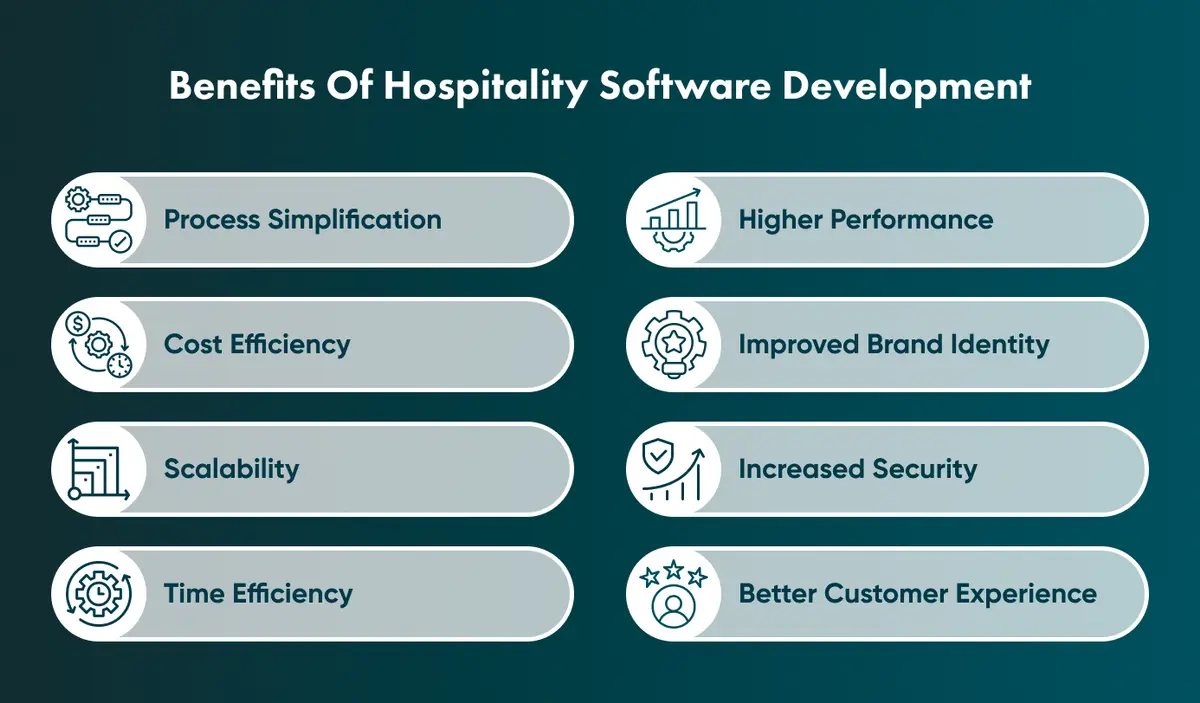
Custom software touches almost every part of a travel or hospitality business. The advantages below are the ones we see most consistently across client projects.
Process simplification
Automating daily tasks, from reservations to housekeeping schedules, is the most immediate win. Custom management software streamlines the working process so staff spend less time on repetitive admin and more time on guests.
Cost efficiency
Manual processes cost money in staff hours, errors and delays. Automating them cuts operational costs and, over time, widens the revenue margin because the same team can handle more volume without more overtime.
Scalability
Software built with scalability in mind grows alongside demand instead of needing to be rebuilt every time the business expands. That single design decision saves a rebuild a few years down the line.
Time efficiency
Automated functionality frees up staff time normally spent on manual data entry or repetitive requests. The software absorbs the routine work so people can focus on the parts that need a human.
Better overall performance
Fewer manual steps mean fewer errors. Faster, more consistent processes add up to a business that simply runs better day to day.
Stronger brand identity
A fast, intuitive, well-designed application says something about a brand before a single member of staff says a word. It becomes part of how guests remember the business, for better or worse.
Tighter security and data protection
Travel and hospitality businesses sit on huge volumes of personal and payment data. That exposure keeps growing as software adds AI-driven personalisation and dynamic pricing on top.
Deloitte's 2026 Travel Industry Outlook makes a sharp point here: as travel companies deploy generative AI to power personalised offers, GDPR's rules on consent, profiling, transparency and automated decision-making stop being paperwork and start being part of how the technology actually gets built. Bolt compliance on at the end, and it shows. Design for it from day one, through proper GDPR consulting and cybersecurity practice, and it's far cheaper than fixing it after a breach.
Better customer experience and loyalty
Ultimately, your software exists for your customer, not the other way round. A high-quality, customer-centric application builds the kind of loyalty that keeps guests coming back and turns first-time bookers into repeat clients.
Types of Travel and Hospitality Software Solutions
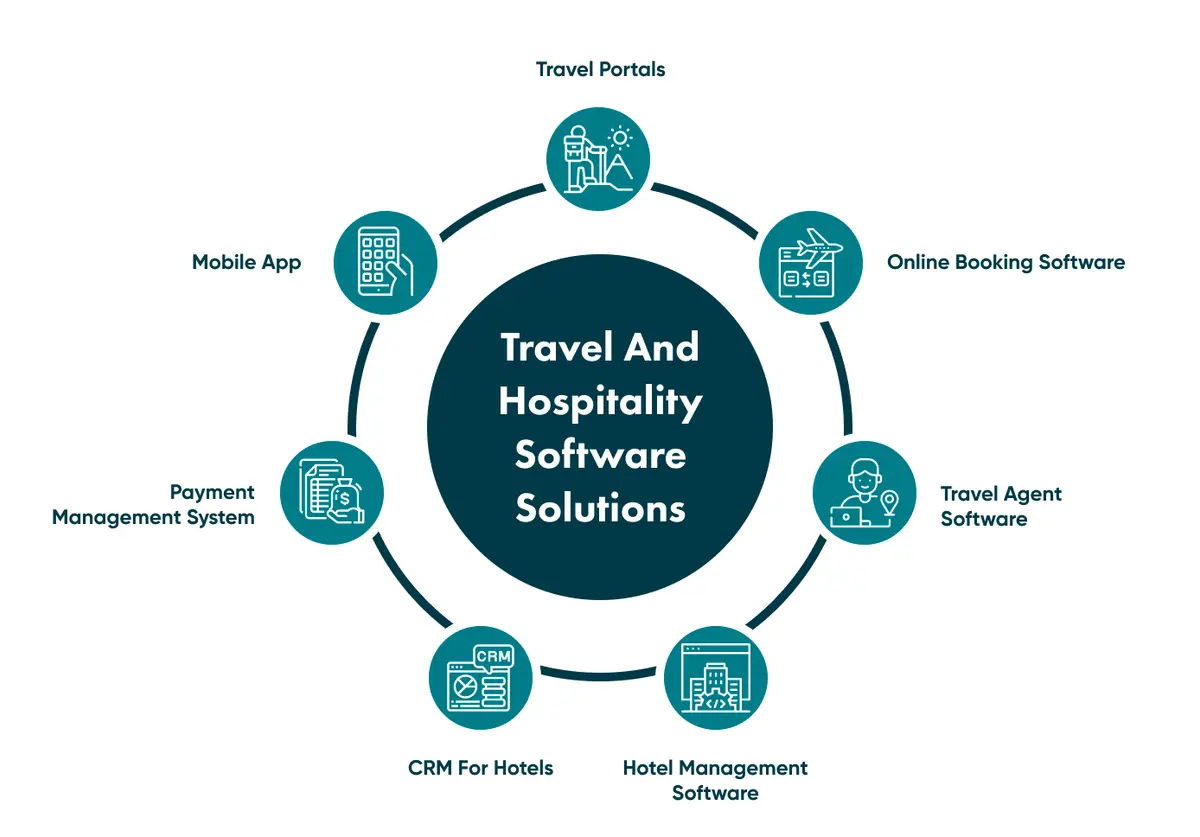
The industry is broad, and the software supporting it is just as varied. Here are the categories that come up most often in our project conversations, covered in more depth in our dedicated work with travel and hospitality clients.
Travel portals
Travel portals handle content mapping, revenue management and booking in one place, built for both B2B and B2C agencies serving multiple supplier catalogues at once.
Online booking software
Travel booking software covers hotel reservations, flight tickets and car rentals. Whatever the vertical, the expectation is the same: a fast, friction-free flow that works on mobile as well as desktop.
Travel agent software
Travel agents use dedicated software to manage client accounts, automate sales and coordinate day-to-day operations. On the airline side, IATA's New Distribution Capability (NDC) standard is a good example of how the underlying technology keeps moving: it is an XML-based data exchange format that lets airlines distribute richer, more personalised offers directly to travel sellers, rather than through older, more rigid distribution channels. Agencies that build around modern standards like this stay competitive for longer.
Hotel management software
Hotel management software gives owners visibility into accounting, budget analytics and staff productivity, while automating the routine tasks that used to eat into front-desk time. Cloud-based hotel management software and hotel property management software in particular have grown fast for exactly this reason: no on-premise servers to maintain, and updates that roll out automatically rather than requiring a costly on-site upgrade.
Mews, a cloud PMS provider, published its 2025 year in review, showing more than 12,500 hotels now run on its platform, an 85% year-on-year jump, supporting over 3 million check-ins through kiosk and online channels alone. That kind of scale only works because the underlying software was built to handle it from the start, which is exactly the argument for custom, purpose-built systems over patched-together spreadsheets.
CRM for hotels
A CRM for hotels analyses guest feedback, stores preferences and supports marketing campaigns aimed at repeat business. We covered the wider case for this kind of system in 7 reasons to use a CRM system, and custom CRM development lets a hotel group tailor that further to its own loyalty programme rather than forcing guest data into someone else's template.
Payment management software
Payment software handles invoicing, billing automation, tax reporting and expense tracking. It isn't unique to travel, but the volume and international spread of transactions in hospitality make a solid, BI-backed payment system particularly valuable for spotting revenue leaks early.
Mobile apps
Whether the business is a hotel, an airline or a restaurant chain, mobile app development is no longer optional. Guests expect to book, check in and manage their stay from a phone, and a business without that option is invisible to a large share of its own market.
Technology Trends Shaping Hospitality Software in 2026
Technology in this space moves fast. These are the trends worth building around this year.
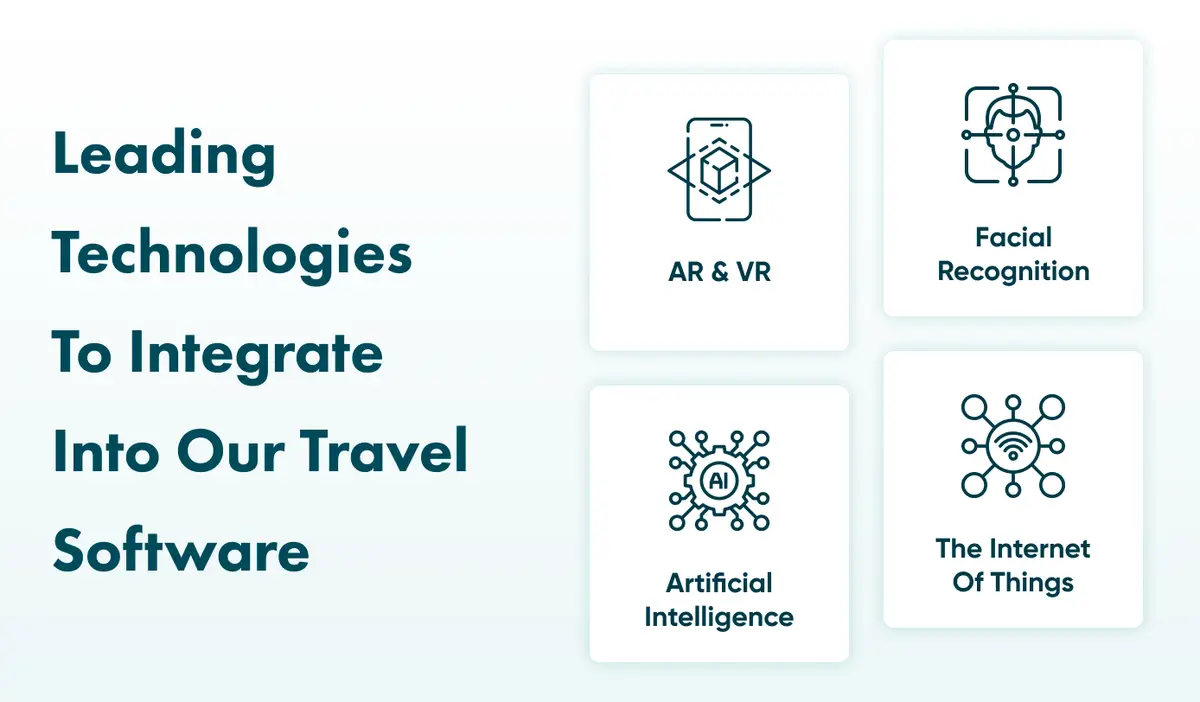
AI agents and generative AI
Generative AI has moved past chatbots answering simple questions. Deloitte's 2026 outlook describes agentic capabilities that let travellers define preferences and delegate entire shopping and booking tasks to an AI system, reshaping how decisions get made and reducing the number of traditional brand touchpoints along the way. For hospitality businesses, that means AI services are shifting from a nice-to-have to a competitive requirement.
IoT and smart rooms
Most hotels still talk about IoT as a future upgrade. Guests already expect it as standard.
Take Hilton's Connected Room programme. Launched back in 2018 and still cited as a benchmark in 2025 smart-hotel coverage, it lets guests use the Hilton Honours app to adjust lighting, temperature and in-room entertainment, alongside a mobile digital key that replaces the old plastic card. Nothing futuristic about it any more. It's been quietly proving itself for years, and it keeps expanding to more properties as guest expectations catch up with it.
Facial recognition and biometric check-in
Facial recognition is still early in travel, but it already speeds up check-in and check-out, strengthens payment security and reduces queues at busy properties. Expect wider rollout as guests grow more comfortable trading a little data for a faster arrival.
Augmented and virtual reality
AR overlays digital information onto the real world in real time, while VR builds an entirely simulated environment through a headset. Together, they let hotels and venues offer virtual tours before a booking is even confirmed, which is a small but genuine edge over a static photo gallery.
Choosing the Right Hospitality Software Development Partner
Picking the right technology partner matters as much as picking the right feature list. A few things worth checking before you sign anything:
- A team shaped around your project, not a generic bench assigned by availability.
- A clear methodology covering requirements, business analysis, UI/UX design, development, testing and maintenance.
- A modern, proven stack. We build on Python and Django for back-end work, JavaScript and React for front-end interfaces, and React Native for mobile apps.
- Real security and compliance discipline, not just a mention in a sales deck.
- A discovery phase that maps requirements before a line of code gets written.
We've applied exactly this approach across travel and hospitality projects, and you can see the results in our case studies. For more on where the wider industry is heading, our piece on current trends in the hospitality industry is worth a read alongside this one, and if you're weighing up how to structure a booking platform from the ground up, single-tenant versus multi-tenant architecture is the next decision worth understanding.
Key Takeaways
Custom hospitality software development is no longer a differentiator reserved for major hotel chains and airlines. Cloud PMS platforms, AI-driven personalisation and IoT-enabled rooms have all moved from experimental to standard practice across the industry, and the businesses adopting them early are the ones setting guest expectations for everyone else.
The right starting point is rarely “build everything at once.” It's usually one well-chosen system, built properly, that solves a real bottleneck. Talk to our engineers about where that starting point should be for your business.
Frequently Asked Questions
What is hospitality software development?
It's the process of building custom digital tools for travel and hospitality businesses, covering booking systems, hotel management platforms, CRMs and mobile apps, designed around how a specific business runs rather than adapted from a generic package.
How much does custom travel and hospitality software cost in 2026?
Cost depends heavily on scope. A single booking module costs far less than a full hotel management platform with CRM and payment integration. A discovery phase is the fastest way to get an accurate estimate.
What's the difference between hotel management software and a CRM for hotels?
Hotel management software runs day-to-day operations: bookings, housekeeping, accounting and staff productivity. A CRM for hotels focuses specifically on guest relationships: feedback, preferences, loyalty and marketing. Many hotels run both together.
Is cloud-based hotel management software worth it for small hotels?
Usually, yes. Cloud PMS platforms remove the cost and hassle of maintaining on-premise servers, and updates roll out automatically. For a small property, that often means enterprise-grade features without an enterprise-sized IT budget.
How long does it take to build custom travel or hospitality software?
Timelines vary by scope, but a well-run discovery phase followed by an agile build typically delivers a working first version in a few months, with further features added in later phases.
What technology trends matter most for hospitality software in 2026?
Generative AI and agentic booking tools, cloud-based property management systems, IoT-enabled smart rooms, and biometric check-in are the four trends with the clearest, most immediate impact on guest experience and operating cost.
Planning a travel or hospitality software project?
See our Hellasgarden rental management case study for an example of software built around an operating business. Explore our travel and hospitality development services to see the types of projects we support.
For a useful first conversation, bring the workflow you want to improve, the systems it needs to connect to, and your target launch date. Discuss your hospitality project with our team.
Share and subscribe to our blog
Related articles

Essential Things To Consider When Building A Travel Website
The tourism industry has suffered in recent times because of the COVID 19 pandemic restrictions. However, business owners have also been actively creating new opportunities for travellers to help them experience a safe and comfortable holi…

How Do You Build an Online Hotel Booking System in 2026?
Nowadays, hotels of all shapes and sizes cannot economically operate without an online connection and some sort of booking system. Almost all customers want to be able to book online, either through a hotel’s own website or through a third…

How To Create An Online Booking System For Your Business
Modern problems require modern solutions. For example, if people want to plan something ahead of time, they want to do everything possible to avoid wasting time. That is why people can book. Online booking helps people do many things, incl…

Current Trends in The Hospitality Industry
The travel and hospitality industries were severely and badly affected by the COVID 19 pandemic. The demand for travel is now returning and hotels are welcoming guests in renewed numbers. However, businesses are adapting to the latest tren…

Single vs Multi-Tenant Apps: Which Architecture to Choose?
What are the main differences and which system would suit your project better? When clients hire a software development company, they need the assistance of specialists to figure out how their software should be built. Everyone is looking…

How can we help you ?